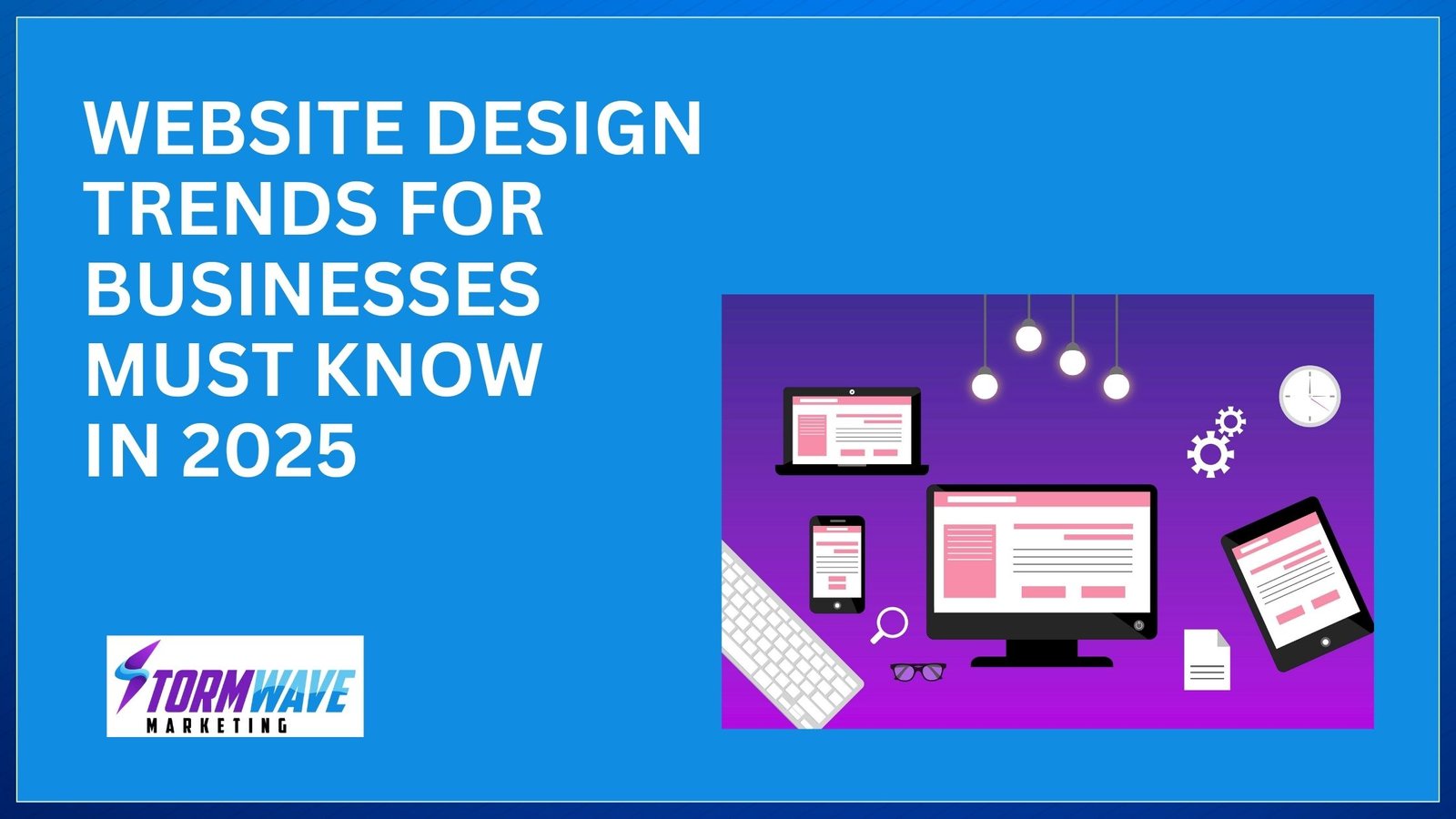
The current web design is changing at a rapid rate, and any business that is not up to date with it risks losing customers to its competitors who are capable of providing them with more comfortable, quicker, and interactive internet experiences. The expectations of websites in 2025 are bigger, the user behavior will be altered, and new technologies are transforming the way individuals browse, shop, and engage with companies through the internet. This is why keeping up with the current Website Design Trends is not only a valuable thing but also a necessity for business development.
A potential customer might come across your company, be it a startup or an established enterprise, and the first point of interaction is your website. A trend-based, contemporary, and strategic web design can enhance conversions, build brand credibility, and increase SEO performance, and eventually lead to more revenue.
We experienced the changes in user interaction and business outcomes that the modernization of design makes at Stormwave Marketing. With the onset of 2025, there are a few design trends that are coming to the fore, and companies need to be aware of them to remain in the game.
This blog will be a breakdown of the best trends to follow in designing a website in 2025, its functionality, importance, and how it has a direct effect on business development.
Why Staying Ahead of Web Design Trends Matters
Web design also changes rapidly, and companies that do not change may easily get left out by the companies that provide faster, cleaner, and easier-to-use online experiences. Being ahead of Website Design Trends does not only present itself in the form of a site that looks up to date; it is more about how your clientele views your brand, how they communicate with your site, and how successful your site is in converting visitors to buyers.
The current users are more demanding than ever. They desire fastness, precision, and effectiveness, and they reward those brands that provide a flawless digital encounter. This implies that the layouts, messy pages, slow loading, and old-fashioned graphics can have a direct negative impact on conversion rates and credibility.
In terms of performance, since the recent web design trends are up-to-date, to keep your business afloat with the current trends in UX, accessibility, and search engine ranking, it is crucial to consider these new developments in web design. Google and similar search engines are starting to give high rankings to websites that have fast loading speeds, can be used with any device, and have easy interactions.
To become scaled in 2025, being up to date with the trends of modern website designs is a strategic benefit for the company. For small local businesses, enterprise brands, or both, visibility, brand trust, and user engagement can be increased with the help of the correct design approach.
We have experienced this at Stormwave Marketing, whereby adopting the appropriate design trends has boosted conversions, bounce rates, and businesses have become market leaders. The fastest-growing brands are the ones that adapt to the digital environment rather than those that anticipate the emergence of change.
Top Website Design Trends for 2025
With the changing technology, user habits, and search algorithms, the Website Design Trends of 2025 are highly oriented towards speed, personalization, accessibility, and the immersion of the user experience. The following are the most effective trends forming the modern business websites, along with some examples to enable you to see how each of these trends is applicable in a real-life situation.
1. AI-Driven Personalization
AI has evolved into a dynamic personalization of the website, displaying users’ content, product recommendations, or layouts depending on their actions.
Example:
A SaaS site will show various homepage CTAs depending on the industry or previous browsing history of the visitor, with the help of AI.
2. Hyper-Fast Performance & Lightweight Design
The standards of performance at Google are at an all-time low. By 2025, websites that have very fast load times and assets that are optimized will win over slower competitors.
Example:
Videos that are heavy in weight can be replaced with WebM compressed videos, or SVG illustrations can be used to increase speed without losing appearance.
3. Minimalist Interfaces (Modern Minimalism)
2025 is pro-clean aesthetic minimalism, spacious plans, low tones, soft gradient, and plain typography that is usable.
Example:
Apple-like designs: huge white space, huge headlines, and iconography.
4. Advanced Accessibility (A11y-Focused Design)
Access is now not a luxury, but a user requirement and prioritizer.
Key A11y elements now trending:
- High-contrast modes
- Voice-enabled browsing
- Keyboard-friendly navigation
- Screen-reader–optimized structure
Example:
A business site that includes a dark mode, dyslexia-friendly fonts, and a text size adjustment.
5. Micro-Animations & Micro-Interactions
Minor gestures improve user experience, offer feedback, and create interactions without overwhelming the customer.
Examples:
- When hovered, a button enlarges a little.
- Advancement indicators in filling forms.
- Delicate scrolling animation.
6. Immersive 3D Elements (Lightweight 3D)
3D was also a method of making websites slow; however, the latest libraries of 3D can be loaded at an exceptionally high speed, allowing interactive parts to become accessible.
Example:
The product website employs a 3D model, and the user can rotate it on desktop and mobile.
7. Voice Search Optimization + Voice UI
Voice search is not new, but the implementation of Voice User Interfaces (VUI) within websites is becoming the norm.
Example:
One can say, Show me pricing and the site automatically scrolls down to the pricing part.
8. Dark Mode as a Default Design Option
The dual-mode design has become a feature available on more websites, where a switch to light or dark can be made.
Example:
A technology site will automatically adjust depending on the settings of the device of user.
9. No-Code / Low-Code Website Enhancements
By 2025, it is expected that businesses will be highly dependent on animations, personalization modules, and content updates done with the help of the low-code tool.
Example:
Marketing departments are making changes to landing pages without involving the developers.
10. Inclusive Content Design
Web design for business growth is not only about graphics, but it also includes content structure. 2025 highlights:
- Shorter paragraphs
- Scannable layouts
- F-pattern, Z-pattern, Patterned reading flows.
- Highly visual storytelling
Example:
A business home page designed in small bites, icons, and interactive features as opposed to long texts.
11. Mobile-First + Gesture-Based Layouts
Mobiles are the leading traffic, so 2025 designs will incorporate:
- Thumb-friendly menus
- Swipe interactions
- Sticky CTAs
- PE Mobile-based visual hierarchy.
Example:
Swipe galleries are put on product pages as opposed to click-through images.
12. Privacy-Focused UX (Cookieless Experience Design)
As cookies go away, design now endorses:
- First-party data collection
- Consent-centric UI
- Transparent privacy flows
Example:
Simple cookie banners with clear “Why we collect data” explanations.
How These Trends Impact Business Growth
The modern trends in Website Design are not merely aesthetic improvements, but directly affect the behavior of site visitors, the ranking of your pages in search engines, and, finally, translate into successful conversion of the visitors into paying customers.
One of the most crucial relationships that will occur in 2025 is that of design and growth. This is the way in which following the appropriate trends increases the performance of the business:
1. Higher Engagement & Longer Session Duration
Micro-animations, motion effects, and immersive 3D visuals are all interactive design features that keep a user involved. Visitors who stay on your site get to explore more pages, get to know more about what you have to offer, and build trust in you, and these are bound to increase the chance of conversion.
2. Improved First Impressions & Brand Perception
Your website is your 24-hour salesperson. Contemporary, hygienic, and user-friendly designs clearly convey professionalism. They include such trends as minimalistic designs, bold types, and refined visuals that make businesses more believable and competent.
3. Better SEO Performance
Some of the 2025 trends that directly affect the ranking of SEO include mobile-first layouts, super-fast load speed, accessibility, and content design structure. Google compensates those sites that provide smoother experiences, i.e., when the designs are updated it can be seen that organic traffic is boosted.
4. Higher Conversion Rates Through UX-Centered Design
Fashionable features such as customized interfaces, streamlined navigation, and painless checkout forms minimize the drop-offs of the users. Customers will have an opportunity to browse and make decisions easily; therefore, the sales, bookings, and inquiries are bound to grow.
5. Greater Trust & Authority
Emotional connections can be built with the help of authenticity-driven trends, such as transparent design, human-focused visuals, and real-life stories about brands. This enhances trust in the users, brand loyalty, and customer loyalty of the customers in the long run.
6. Competitive Advantage in a Fast-Changing Market
Proactive brands that update their websites have an advantage over the rest of the competitors who are still stuck with old-fashioned templates or web pages that are slow. A modern site can be the factor that matters in the industries where customers shop and compare several businesses within a short period of time.
7. Future-Proofing the Business
Such technologies as AI integration, voice search, accessibility compliance, and immersive UX will make sure that businesses will not lag as digital standards are changing. Implementing these trends will save time, money, and redesigning in the future.
8. Stronger Mobile Performance
Mobile-first design trends have resulted in a high conversion rate through mobile, especially as more than 60 percent of business website traffic is carried out through smartphones. Fine mobile UX increased leads and revenue.
9. Better Local & Global Reach
Such capabilities as multilingual designs, locationally tailored content, and artificial intelligence-based recommendations can assist companies in accessing people beyond their region. This expands the market without any additional marketing investments.
10. Simplified Brand Communication
The current tendencies in design are oriented toward clarity. Effectively highlighting important messages, services, and CTAs will allow businesses to deliver the value immediately, reduce bounces, and enhance the quality of leads.
FAQs: Website Design Trends for 2025
1. What are the most important web design trends for 2025?
The most popular Website Design Trends of 2025 are AI–driven personalization, hyperfast web experience, accessibility-friendly design, bold typography, 3D 3D elements, voice-activated navigation, micro-interactions, minimalistic designs, dark-mode optimization, and modular page designs. The trends assist businesses in designing websites that are modern, intuitive, and very engaging.
2. How often should businesses update their website design?
The ideal frequency of refreshing or updating a web page design is 2- 3 years (or earlier in cases of poor performance, changed user behavior, or new branding/SEO requirements). In highly dynamic digital environments such as 2025, keeping up to date will keep your business relevant and on track with the needs of the users.
3. Which web design trends improve SEO the most?
Trends that will enhance SEO are:
- Page speed optimization
- Responsive design, mobile-first.
- Accessibility-centered design
- Structured content blocks
- AI-based UX advances: These trends have a direct impact on the user engagement, dwell time, and Core Web Vitals, which are major metrics Google considers when ranking websites.
4. Are 2025 design trends suitable for small businesses?
Yes, the majority of the modern design trends could be scaled and were inexpensive, so they are suitable for small businesses. Minimalist designs, AI-based design services, speedy websites, and mobile-first platforms do not require big budgets. Other agencies, such as Stormwave marketing, also provide tailor-made and cost-effective solutions to small business enterprises that nevertheless desire a state-of-the-art online profile.
Conclusion
The trends in website design in 2025 are not the fanciful notion of what is nice to have, but the basis of how companies attract, engage, and turn customers into buyers in a digital-first world. With AI-based personalization, lifelike visuals, convenient layouts, and mobile-driven experiences, these tendencies can allow the brands to remain relevant and competitive. A contemporary website is no longer a luxury, but an essential business contributor, confidence, and presence on the internet.
With the landscape changing rapidly, an early adopting business will experience increased engagement, user satisfaction, and enhanced performance in search engine optimization. No matter how much you plan to overhaul your entire design or simply update key features, it is important to remain in step with these trends to ensure that your site is at its best.
When you are willing to turn your site into a business-oriented digital asset, Stormwave Marketing will assist you in launching proactive design solutions aligned with your business objectives and future-optimize your online presence.
At Stormwave Marketing, we’re more than just a digital marketing agency – we’re a team of passionate strategists, creators, and problem-solvers dedicated to helping businesses thrive online.