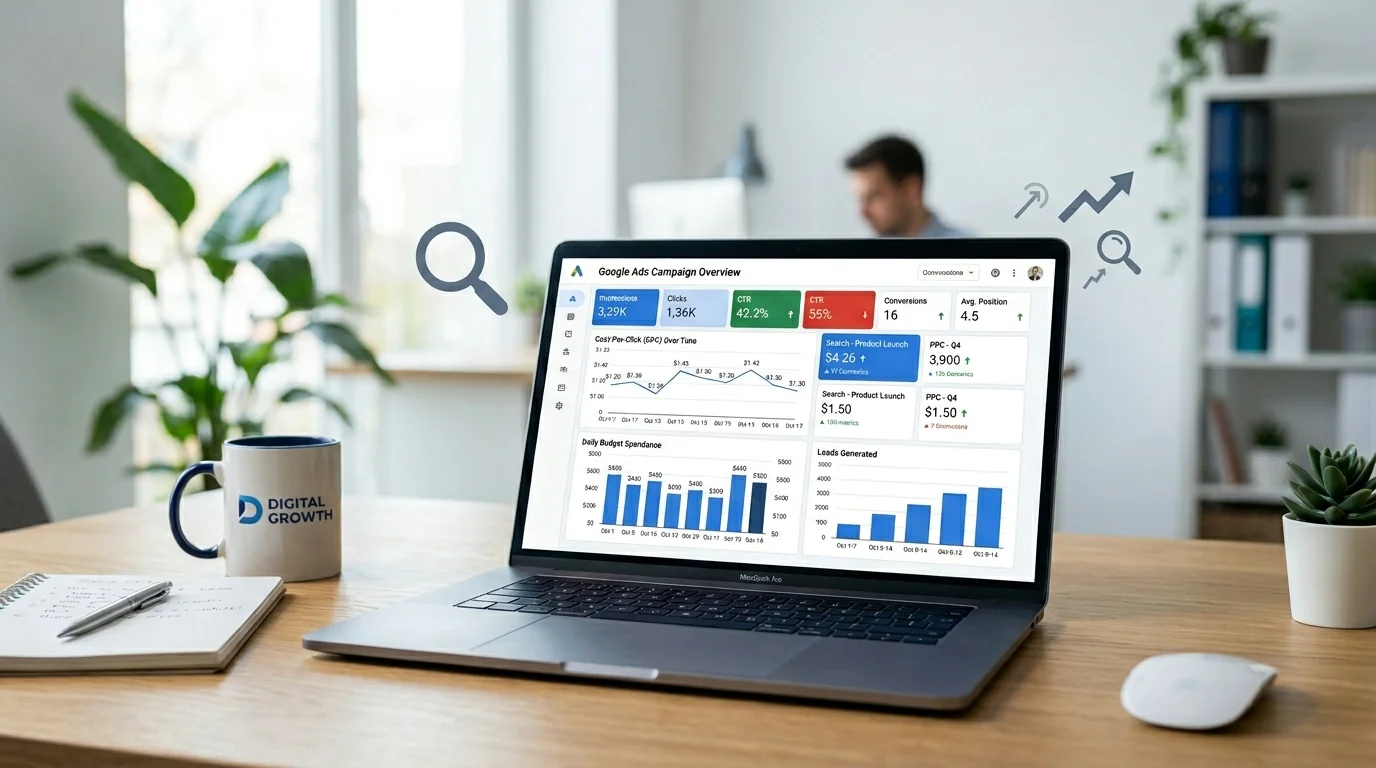
If you’re wondering how much are Google Ads, the honest answer is that. The cost of Google Ads for small businesses depends on the industry, competition, and the type of keywords being targeted. Some businesses pay lower costs, while others spend much more because competitive keywords usually have higher CPC rates. The average Google Ads cost can vary widely, but many small businesses start with a monthly budget of $1,000 to $2,500.
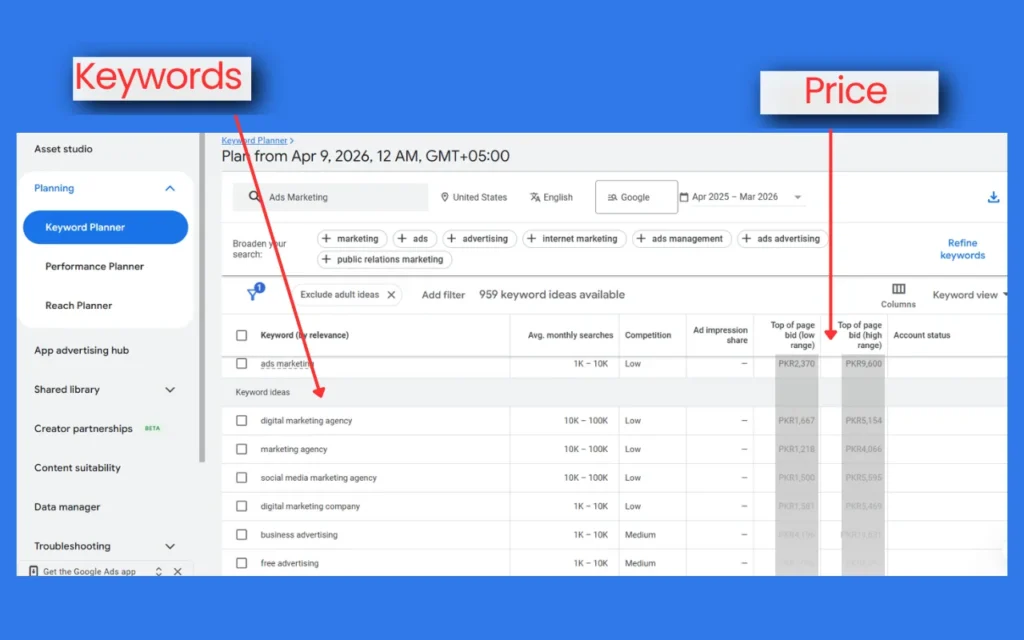
You can use Google Keyword Planner to estimate search volume and get a sense of what keywords may cost before launching a campaign. Google Keyword Planner
Cost per click is often just a few dollars in some industries, while highly competitive markets like legal, finance, and home services can pay much more. For example, a local retail business may be able to attract clicks at a lower cost, while a law firm may pay $10 or more per click because one customer can be worth thousands of dollars.
Businesses with higher customer value are usually willing to spend more to stay visible in search results. On the other hand, businesses with lower-priced products often need lower CPCs to remain profitable. The more competitive the industry and the more valuable the lead, the more a business is likely to spend on Google Ads. If you want expert help controlling spend, improving targeting, and getting better results, working with a Google Ads Management Agency in Florida can help you build a more cost-effective campaign.
That said, how much are Google Ads is not really a one-number question. Google Ads cost depends on your keyword intent, your target audience, your Quality Score, your landing page experience, your ad relevance, and how competitive your market is. A local cleaning company, for example, will usually see a very different CPC and monthly ad budget than a law firm, roofing company, or software brand.
The good news is that small businesses do not need a huge budget to get started. What matters more is whether your campaign is built with the right structure, the right search intent, and the right conversion tracking from day one. That is where many owners lose money. They do not overspend because Google Ads is bad. They overspend because the campaign is too broad, the keywords are weak, or the landing page does not help visitors take action.
How Much Are Google Ads for a Small Business?
For most small businesses, Google Ads pricing usually falls into a few practical ranges. A cautious local business may begin with a monthly ad budget of $1,000 to $2,500. A business in a more competitive market may need $3,000 to $5,000+ per month just to gather enough clicks and conversion data to optimize properly. Across broader benchmarks, many businesses spend $1,000 to $10,000 per month on Google Ads.
If you want a simpler way to think about it, break the question into three parts:
- how much you pay per click
- how many clicks you need
- how many of those clicks turn into leads or sales
That is the real math behind google ads cost. A campaign is not expensive just because the CPC looks high. It becomes expensive when the clicks do not turn into revenue.
Average CPC, CPM, and CPA in Google Ads
Most people first look at CPC, or cost per click, when asking how much are Google Ads. Recent benchmark data shows an average Google Ads CPC around $5.26 in 2025, though this varies a lot by industry. In some sectors, the average search CPC can be close to $1 to $3, while more competitive industries such as legal or consumer services can be much higher.
If you run display ads, the cost often works differently. Scorpion notes that Display Network clicks are typically under $1 per click, while BrandsBro cites display CPM ranges that can run from roughly $1 to $50 per 1,000 impressions depending on targeting and competition.
Then there is CPA, or cost per action. This tells you what it costs to generate a lead, call, form fill, or sale. WordStream’s 2025 benchmark puts the average cost per lead at $70.11, which gives useful context for small businesses trying to set realistic expectations.
Why Industry Competition Changes Everything
Industry competition is one of the biggest reasons Google Ads pricing for small businesses is so uneven. A local bakery targeting branded searches in one neighborhood will usually pay much less than a personal injury lawyer, roofing contractor, or finance company targeting high-intent keywords. WordStream’s industry benchmark data shows search CPCs ranging from about $1.16 in e-commerce to $6.75 in legal, with several industries landing somewhere in the middle.
This is why I always tell business owners not to compare their budget with someone else’s without context. Two companies can both be “small businesses” and still live in completely different advertising worlds. One may only need a few good leads a month to win. Another may need a steady stream of daily inquiries to stay profitable.
What Actually Drives Google Ads Cost?
If you want a better answer to how much are Google Ads, you need to understand what controls pricing behind the scenes. Google Ads is not a flat-rate service. It runs on an ad auction, and your cost is shaped by a mix of bids, competition, expected click-through rate, landing page experience, and ad relevance. Google explains that CTR is calculated as clicks divided by impressions, and those engagement signals matter because each ad and keyword has its own performance history.
The Google Ads Auction and Max CPC Bid
Every time someone searches, Google runs an ad auction to decide which ads appear and in what order. Your Max CPC bid tells Google the most you are willing to pay for a click, but that does not mean you always pay that full amount. Your actual CPC depends on your competition and your overall ad quality.
This matters for small business Google Ads because a higher budget alone will not fix a weak campaign. You can outspend yourself very quickly if your keyword strategy is messy or your campaign management is too broad.
Quality Score, Ad Rank, and Ad Relevance
Quality Score is one of the most important factors in keeping Google Ads cost under control. It is influenced by expected CTR, ad relevance, and landing page experience. When these pieces are strong, your ad can compete more efficiently and often at a lower cost. When they are weak, Google makes you pay more for the same traffic. BrandsBro and Google’s own help content both reinforce these factors.
Think of it this way: if your ad copy matches the keyword, your landing page answers the visitor’s question, and people actually click and convert, Google has more reason to trust that your ad deserves visibility.
Search Intent and Keyword Intent
Search intent changes everything. Informational intent keywords often bring cheaper clicks but weaker buying intent. Transactional intent or commercial intent keywords usually cost more, but they are often the terms that bring the best leads.
A person searching “what is Google Ads” is curious. A person searching “emergency plumber near me” is ready to act. That second keyword may cost more, but it may also be worth far more to the business. This is why keyword relevance and customer value matter more than chasing cheap clicks.
Google Ads Budget for Small Business: What Is a Good Starting Point?
A realistic google ads budget for small business depends on your offer, your average job value, your close rate, and how quickly you want data. Most new campaigns need enough spend to produce meaningful clicks and conversions. If you spend too little, you may not gather enough data to know what is working. WordStream says many new campaigns cost about $20 to $50 per day, and many SMBs start between $1,000 and $2,500 per month.
A practical starting point might look like this:
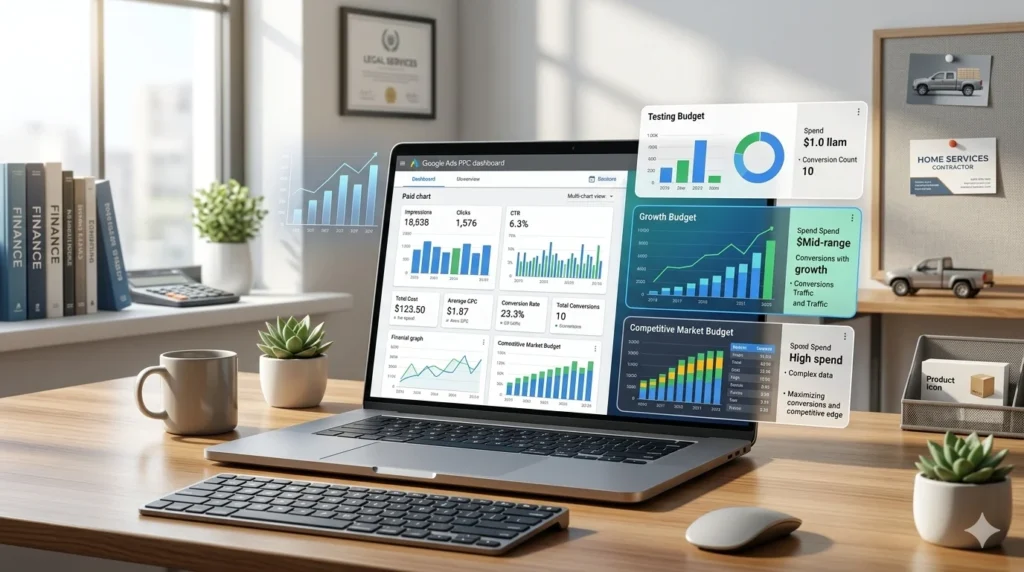
Budget Range 1: Testing Budget
If you are a local business with a tight budget, you may start around $1,000 to $1,500 per month. This can work for geo-targeted campaigns, branded terms, highly focused services, and a smaller target audience. It is often enough to test ad copy, negative keywords, mobile landing pages, and conversion tracking without putting too much at risk.
Budget Range 2: Growth Budget
A business looking for stronger lead generation may need $2,000 to $5,000 per month. This gives more room for search ads, retargeting, local targeting, smart bidding, and landing page testing. It also gives the campaign enough data to improve campaign performance over time.
Budget Range 3: Competitive Market Budget
If you operate in legal, finance, home services, or other high-competition spaces, you may need $5,000+ per month to stay visible in the auctions that matter. In those cases, tighter campaign management and higher-quality landing pages become even more important, because wasted spend adds up fast.
A good rule is simple: set a budget that can generate enough clicks to test properly, but not so much that poor setup drains your money before you learn anything.
Real Cost Examples by Industry
Industry benchmarks are helpful because they stop the conversation from staying too vague. Here are a few examples from current benchmark data for average search CPC:
- E-commerce: about $1.16
- Travel & hospitality: about $1.53
- Education: about $2.40
- Finance & insurance: about $3.44
- Technology: about $3.80
- Consumer services: about $6.40
- Legal: about $6.75
Now pair that with a real-world mindset. If a dentist pays $4 per click but closes one new patient worth hundreds or thousands over time, that campaign may still be a great deal. If an online store pays $1.50 per click but converts poorly and loses margin, that cheaper traffic may actually be the bigger problem.
That is why ROI focus matters more than vanity metrics. Google Ads pricing for small businesses only makes sense when measured against lead value, revenue, and customer lifecycle value.
How to Lower Google Ads Cost Without Killing Results
This is the part many blogs skip. Yes, you can lower spend, but slashing budget blindly usually hurts performance. A better goal is to lower wasted spend while protecting the clicks that matter.
Use Negative Keywords Early
Negative keywords help block irrelevant searches, which protects your monthly ad budget. If you sell premium services, you may want to exclude searches like “free,” “cheap,” or “jobs.” This one move alone can improve keyword relevance and reduce wasted clicks.
Tighten Your Geo-Targeted Campaigns
Small businesses often do better when they narrow their targeting. If you only serve one city or county, do not pay for broad clicks outside your service area. Local targeting makes your spend more efficient and helps your ads speak directly to the audience most likely to convert.
Improve Landing Page Experience
A landing page should match the keyword, the ad copy, and the user’s expectation. If someone clicks on an ad for “roof repair estimate,” they should not land on a vague homepage. They should reach an optimized landing page built around that service. Better landing page experience can support Quality Score and help with conversion rate at the same time.
Track Calls, Forms, and Offline Conversions
If you are not tracking conversions, you are guessing. Call tracking, form tracking, offline conversions, and attribution models help you understand which keywords and campaigns actually generate leads and revenue. This is one of the clearest E-E-A-T signals in paid search content: data-driven recommendations beat opinions every time.
Businesses that want paid traffic and organic traffic to support each other should also look at SEO Services Florida. SEO and PPC work better together than most people realize, especially when you are building long-term online visibility.
Are Google Ads Worth It for Small Businesses?
Yes, but only when the campaign is built around the right economics. Google Ads works best when your offer is clear, your search intent is strong, and your conversion tracking is accurate. If your average sale is valuable and your team responds quickly to leads, Google Ads can be one of the fastest ways to generate demand.
Where small businesses struggle is not always the platform itself. It is often campaign structure, weak ad copy, poor targeting, or slow follow-up. A decent campaign can look unprofitable if nobody answers the phone, if leads are not tracked, or if the landing page makes people work too hard.
This is also why it helps to zoom out and think beyond one channel. If you are comparing providers or planning a wider growth strategy, learn more about our How to Choose the Best Digital Marketing Agency in Florida to see what to look for before handing over your budget.
What Small Businesses Should Focus On First
If you are just getting started, do not chase every campaign type at once. Start with the basics:
- Search ads before broad experimentation
- High-intent keywords before informational terms
- Strong conversion tracking before scaling spend
- One or two services before a giant account structure
- Real landing pages before sending traffic to generic pages
From there, you can test smart bidding strategies like Maximize Conversion or Target ROAS, layer in retargeting, and expand into display ads, shopping ads, or video ads when the numbers make sense. Google’s Keyword Planner can also help estimate search volume and average ad costs for keywords before you launch.
If you need support across paid media, SEO, brand messaging, and campaign performance, partnering with a Digital Marketing Agency Florida business owners already trust can save a lot of expensive trial and error.
A Simple Formula to Estimate Your Google Ads Cost
Here is an easy way to frame the question.
Estimated monthly cost = expected clicks × average CPC
Then add the business layer:
Estimated monthly return = leads × close rate × average customer value
So if you expect 300 clicks at an average CPC of $4, your estimated ad spend is about $1,200. If those 300 clicks produce 15 leads, and you close 20% of them into 3 customers worth $1,000 each, that same budget may produce $3,000 in revenue. That is a simple example, but it shows why CPC alone never tells the whole story.
This is the kind of plain-language math that helps small businesses stop treating Google Ads like a mystery. It is not magic. It is a bidding system tied to intent, performance, and follow-through.
Final Thoughts on How Much Are Google Ads
So, how much are Google Ads for a small business? In most cases, expect a starting monthly ad budget somewhere around $1,000 to $2,500, with many businesses spending more as competition and goals increase. Average CPC in 2025 benchmark data sat around $5.26, but your actual cost can swing much lower or much higher depending on industry competition, keyword relevance, Quality Score, ad relevance, and landing page experience.
The smartest way to approach google ads cost is not to ask for one universal number. Ask how much it costs to generate a lead that actually turns into revenue. That shift in thinking changes everything.
And if you want a cleaner, more profitable setup from the start, it is worth exploring a dedicated Google Ads Management Agency in Florida that can help with bidding, targeting, conversion tracking, ad copy, and campaign optimization before budget leaks turn into a pattern.
FAQs
1. How much are Google Ads for a small business?
Google Ads for a small business usually start at around $1,000 to $2,500 per month, but the actual cost depends on your industry, competition, keyword targeting, and campaign goals. Some businesses spend less at the start, while others need a larger budget to compete in high-cost markets.
2. How much does Google Ads cost per click?
Google Ads cost per click varies by industry and keyword competition. In some industries, clicks may cost only a few dollars, while highly competitive sectors like legal, finance, and home services can pay much more. The final CPC also depends on Quality Score, ad relevance, and landing page experience.
3. Why do some businesses pay more for Google Ads than others?
Some businesses pay more because their industries are more competitive and each lead is worth more money. For example, a law firm may be willing to pay a much higher CPC because one new client can generate significant revenue. Businesses selling lower-priced products usually need lower click costs to stay profitable.
4. Is Google Ads worth it for small businesses?
Yes, Google Ads can be worth it for small businesses when campaigns are properly managed. The platform can generate targeted traffic, leads, and sales quickly, but results depend on budget, keyword strategy, ad copy, landing pages, and conversion tracking.
5. How can I reduce my Google Ads cost?
You can reduce Google Ads cost by improving keyword targeting, using negative keywords, tightening location targeting, improving landing page experience, and increasing ad relevance. Businesses that want better performance and lower wasted spend often work with a Google Ads Management Agency in Florida to manage campaigns more effectively.

Adrian J. Cole is a digital marketing strategist and SEO expert with a passion for turning complex data into actionable growth strategies. With deep expertise in technical SEO, content optimization, and semantic search, he helps businesses rank higher, engage audiences, and drive measurable results. When he’s not decoding algorithms or optimizing websites, Adrian shares insights on the latest marketing trends to empower professionals and brands alike.