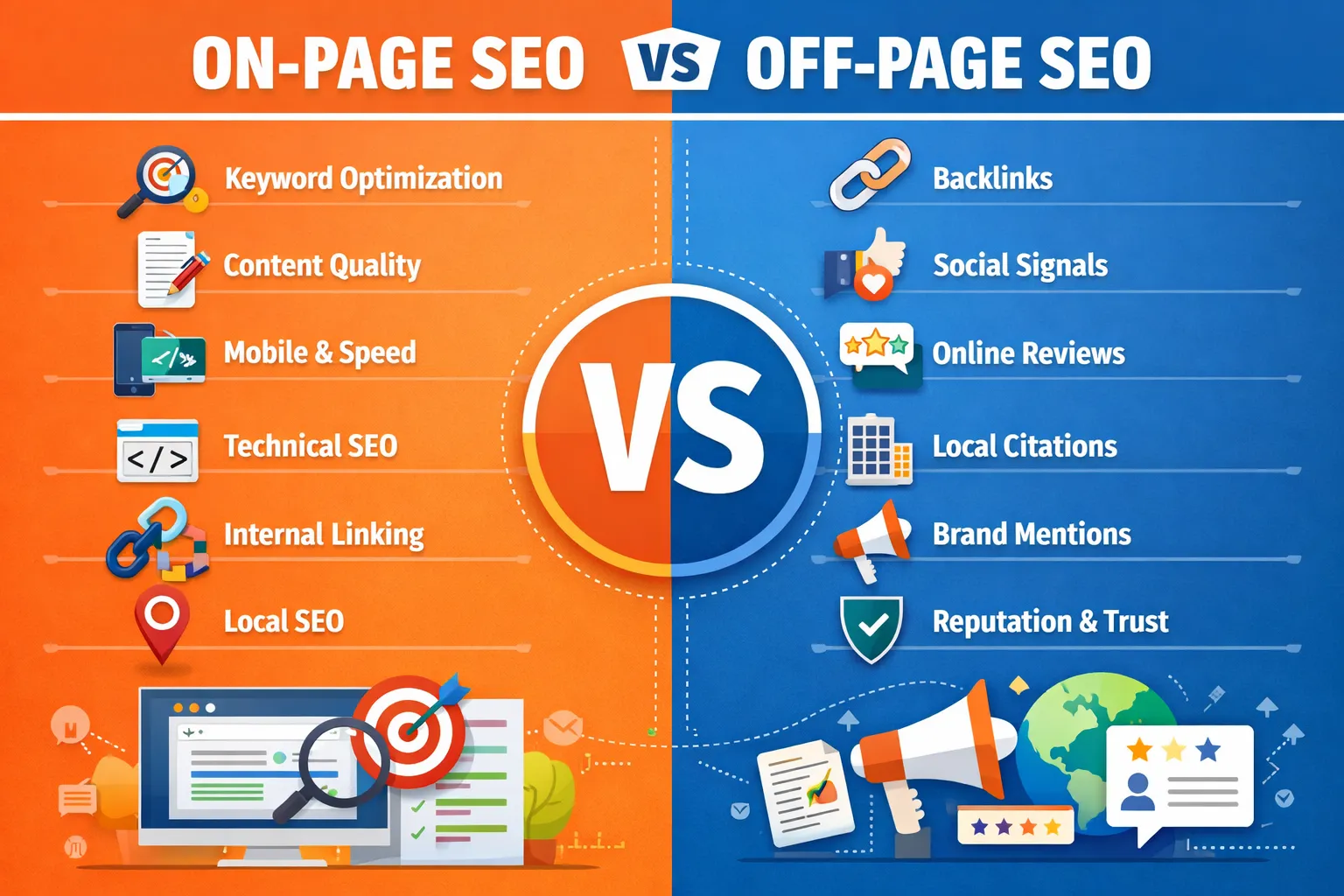
If your business is deciding between on-page and off-page SEO, on-page SEO should be your first focus. It helps improve website content, keyword relevance, title tags, meta descriptions, headings, internal links, mobile usability, page speed, and local search visibility, making it easier for search engines to understand your pages and rank them for relevant searches.
SEO consists of two main strategies: on-page SEO and off-page SEO. Although both are essential to improving a website’s search visibility, they focus on different parts of your online presence. Knowing the difference helps you decide where to invest first, especially if you want better rankings in local search, stronger relevance in SERPs, and more qualified traffic.
Several digital strategies, including local SEO, content optimization, technical SEO, and reputation management, can improve site performance. Any business that wants to compete online should understand how both on-page and off-page SEO work together.
Google Search Central – SEO Starter Guide
Best for supporting your on-page SEO points and adding trust. Google is the strongest source for SEO basics. Google’s SEO Starter Guide
On-Page SEO: Optimizing Your Website for Success
On-page SEO is everything you do on your website to help it rank higher in search engine results and give users a better experience. This includes keyword optimization, content quality, title tags, meta descriptions, heading structure, internal linking, mobile-friendly design, page speed, URL structure, and helpful content that matches search intent. If your business wants long-term visibility, on-page SEO builds the foundation.
1. Keyword Optimization
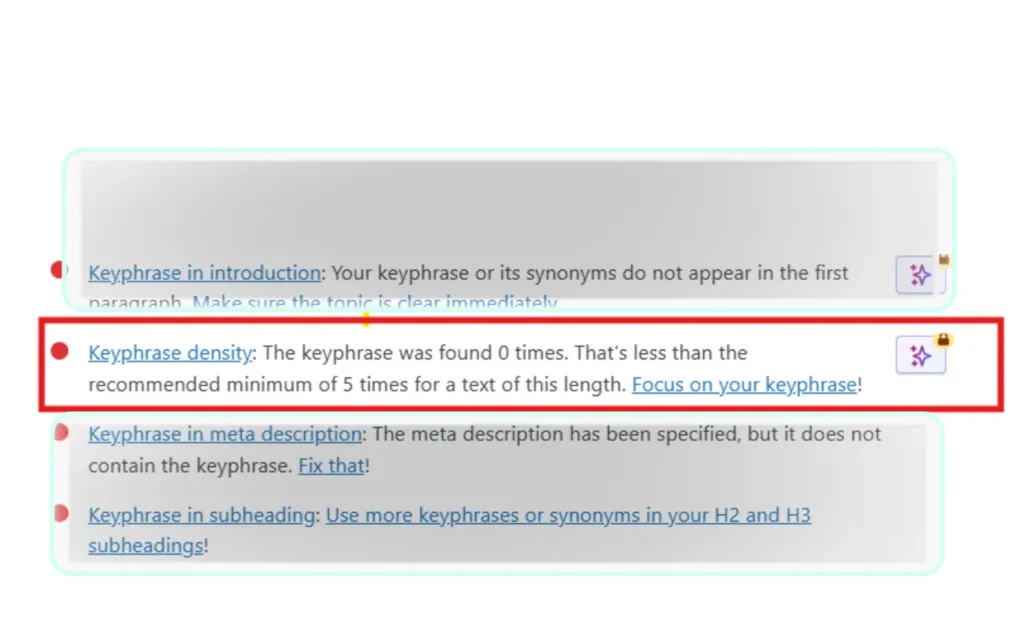
Keyword optimization is one of the most important parts of on-page SEO. You need to find the search terms your audience uses and place them naturally in your content, headings, meta descriptions, title tags, URLs, and image alt text. These may include short-tail keywords like “Plumber in Florida” and long-tail keywords like “Emergency Plumber Services in Miami.”
Tip: Use tools like Google Keyword Planner or SEMrush to identify high-volume, relevant keywords with clear search intent.
Example: If you run a service-based business, include terms like “Google Business Profile optimization,” “local SEO,” “organic traffic,” “search engine rankings,” and “improve local visibility in Florida” in a natural way throughout your content.
If you need expert help building a keyword strategy, improving your page structure, and strengthening your on-page SEO foundation, working with a Digital Marketing Agency Florida can help you target the right audience with the right content.
2. Google Business Profile Optimization
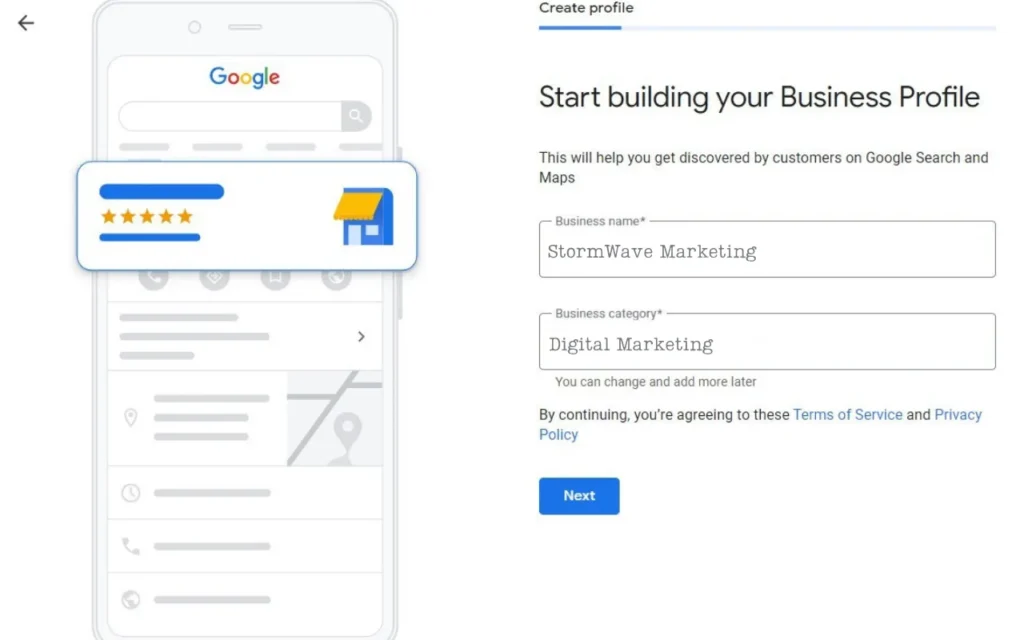
Your Google Business Profile is one of the most important assets for local SEO. A properly optimized profile helps your business appear in local search results, Google Maps, and high-intent local queries. It also supports trust, relevance, and local authority, which are important for both users and search engines.
A complete profile should include:
- accurate business name, address, and phone number
- business hours
- services
- photos
- reviews
- relevant local business categories
- updated business information
A well-managed profile improves your chances of being found by nearby customers and supports stronger local search visibility. Businesses that want better local performance can benefit from GMB Optimization Services Florida to improve profile accuracy, visibility, and customer engagement.
3. Content Creation and Optimization
High-quality, relevant content is a core pillar of on-page SEO. Your website should include useful blog posts, service pages, FAQs, and landing pages that directly answer customer questions. This is also where strong NLP coverage matters. Search engines look for topic relevance, semantic depth, entity relationships, and content that clearly satisfies the user’s query.
To make your content more competitive, include related SEO terms naturally such as:
- search intent
- keyword research
- title tag
- meta description
- H1 and H2 headings
- internal links
- page speed
- mobile optimization
- structured data
- schema markup
- featured snippets
- Google Search Console
- Google Analytics
- local SEO
- authority
- trust
- conversions
Tip: Publish fresh content regularly and update older pages so your site stays accurate, useful, and relevant.
Action: Adding a blog helps you target a broader range of keywords and capture more search queries. It also gives you more chances to build internal links and topical authority across your website.
If you want your pages professionally optimized for visibility, rankings, and conversions, targeted seo services florida can strengthen content strategy, technical structure, and keyword relevance.
4. Mobile Optimization and Site Speed
Many users now search from mobile devices, so your website must be responsive, fast, and easy to navigate. Mobile usability and page speed are important ranking factors because they affect user experience, engagement, and conversion rates.
On-page SEO should include:
- responsive web design
- fast-loading pages
- compressed images
- clear navigation
- clean code
- user-friendly layout
- strong Core Web Vitals performance
Tip: Use Google’s Mobile-Friendly Test and PageSpeed Insights to check how well your website performs across devices.
A fast, mobile-friendly site helps users stay longer, reduces bounce rates, and improves your chances of ranking higher in search results.
5. Technical Signals That Support On-Page SEO
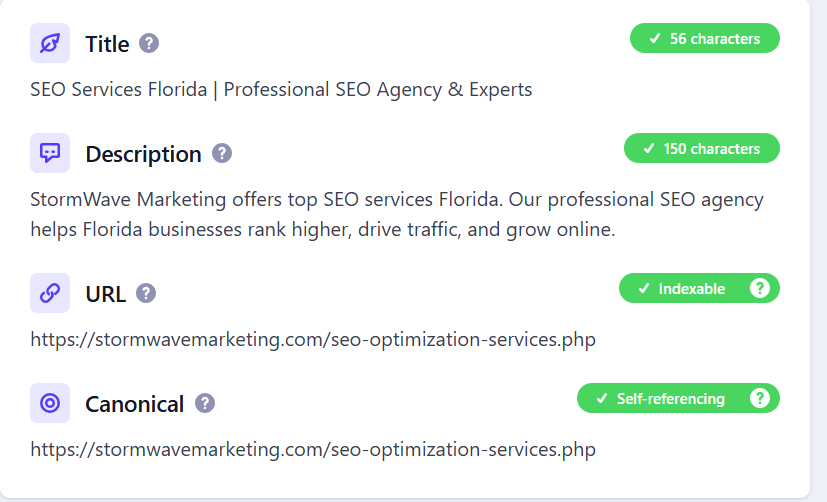
On-page SEO is not just about words on a page. Search engines also look at technical elements that help them crawl, index, and understand your content. This includes:
- clean URL structure
- crawlability
- indexability
- schema markup
- image alt text
- title tag optimization
- meta descriptions
- internal linking
- canonical setup
- HTTPS security
These signals help search engines interpret your content more accurately and improve how your pages appear in search results. Strong technical SEO also supports better performance in rich results and search features.
Off-Page SEO: Building Authority and Trust
Off-page SEO refers to the actions taken outside your website to improve credibility, authority, and online reputation. It helps search engines understand whether your website is trusted by others. This includes backlinks, local citations, reviews, social proof, branded mentions, and engagement across other platforms.
1. Link Building
Link building is one of the strongest off-page SEO strategies. When reputable websites link to your pages, it signals that your content is useful, relevant, and trustworthy. High-quality backlinks can improve rankings, authority, and visibility across search results.
Tip: Focus on earning backlinks from relevant, high-authority websites in your industry or location.
Example: If you have a service page about local SEO, backlinks from business directories, marketing blogs, or regional websites can strengthen its authority and local relevance.
2. Social Media Engagement
Social signals may not directly control rankings, but social media can increase content visibility, attract traffic, build awareness, and create more opportunities for shares and backlinks. It also helps support brand credibility and user trust.
Tip: Share your blog posts, updates, offers, and educational content across your social channels to increase reach and engagement.
3. Google Reviews and Reputation Management
Reviews play a major role in local SEO and trust-building. Strong review signals help improve your reputation and influence how customers see your business before they even visit your website. Reviews also support local rankings and increase the chance of getting more leads.
Tip: Encourage satisfied customers to leave honest reviews on your Google Business Profile and reply to all reviews professionally.
This improves trustworthiness, customer confidence, and local visibility. It also shows real business experience, which is an important EEAT signal.
4. EEAT Signals That Strengthen Rankings
For businesses that want better blog performance and long-term SEO growth, EEAT matters. That means your content should show:
- Experience through real examples, practical advice, and real business scenarios
- Expertise through accurate information, useful guidance, and subject knowledge
- Authoritativeness through strong service pages, trusted backlinks, and brand credibility
- Trustworthiness through secure pages, honest claims, updated information, and clear contact details
Adding EEAT to your blog does not mean changing your writing style. It means making your content more reliable and more useful. You can do this by:
- answering the query directly
- using accurate and current information
- including helpful examples
- linking to relevant service pages
- maintaining strong on-page structure
- updating the article when needed
Which One Should Your Business Focus On?
Both on-page SEO and off-page SEO matter, but the right priority depends on where your business stands today.
For new businesses:
Start with on-page SEO. Build a strong website, improve keyword targeting, optimize your Google Business Profile, create useful content, and make sure your site is mobile-friendly and technically sound.
For growing businesses:
Once your website is properly optimized, focus more on off-page SEO. This includes link building, review generation, local citations, and reputation management to improve trust and authority.
For businesses offering digital and technical services:
A strong website structure, content system, and conversion-focused user journey are essential. If your company also needs custom platforms, automation, or business tools, Software Development Service Florida can support digital growth alongside SEO strategy.
For businesses wanting faster lead generation:
SEO is powerful for long-term growth, but paid search can bring immediate visibility. Combining SEO with Google Ads Management Agency in Florida support can help your business attract qualified traffic while your organic rankings continue to grow.
When combined, on-page SEO and off-page SEO create a balanced strategy that improves search visibility, drives targeted traffic, builds trust, and increases conversions.
Conclusion
On-page SEO and off-page SEO both matter, but most businesses should begin with on-page improvements because they directly affect content relevance, search intent matching, user experience, technical SEO, and local visibility. Once your website is well-optimized, off-page SEO helps build authority through backlinks, reviews, social proof, and trust signals.
If you want better rankings, stronger local reach, and more qualified leads, the best approach is to improve your website structure, content quality, Google Business Profile, and authority together. A complete digital strategy that includes SEO, content optimization, local SEO, and paid search can help your business grow faster and compete more effectively online.

Adrian J. Cole is a digital marketing strategist and SEO expert with a passion for turning complex data into actionable growth strategies. With deep expertise in technical SEO, content optimization, and semantic search, he helps businesses rank higher, engage audiences, and drive measurable results. When he’s not decoding algorithms or optimizing websites, Adrian shares insights on the latest marketing trends to empower professionals and brands alike.